Prologue
A HUNDRED DAYS for A HUNDRED-POUNDER
Trophy Elephant hunting with Felix Marneweche of Camelthorn Safaris, Nyae Nyae Conservancy,
Namibia -- 2014


Camelthorn Safaris: Felix Marnewecke - Elephant Wizard

Florian Huettner - Partner

Trackers:
Xhau - The apprentice tracker
Robert - Number one tracker
Cache- The sage old tracker

Xhau, Robert and Cache
Staff: Ralf - Apprentice
Teresa - Chef
Hilifa - Driver & Handyman
Namche - Kitchen Boy and Camp Staff
Demmy – Kitchen Boy and Camp Staff

Hilifa and Teresa

Namche and Demmy
Oh, and Felix's rat and mouse dog, "Max"


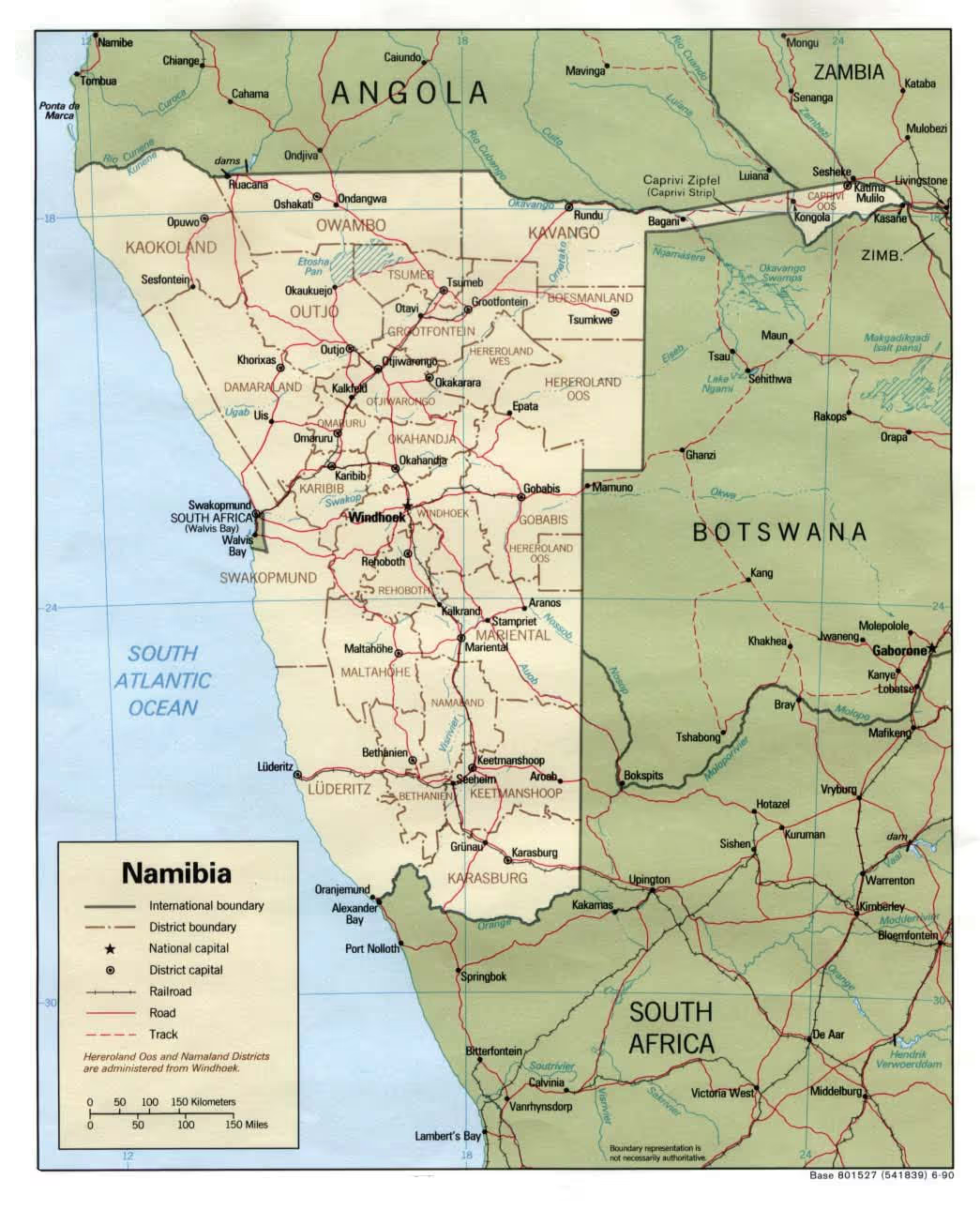
Hunting Area: Nyae Nyae Conservacy, Namibia. Nyae Nyae (formerly Bushmanland) is located in the
Northeast of Namiba. Botswana creates the eastern border of the conservancy, while to the south, west and north, Ondjou and Na-Jaqna Conservancies and Khaudum National Park adjoin Nyae Nyae, and in turn border onto other conservancies to form a huge contiguous conservation landscape. Nyae Nyae is the oldest, as well as the second largest conservancy in Namibia, with 900,000 hectares of free roaming area with limited road access.
Big game animals in Nyae Nyae include elephant, lion, leopard, giraffe, eland, kudu, blue wildebeest, roan, gemsbok, hartebeest, springbok, duiker, steenbok, warthog, spotted hyena and jackal. More than 200 bird species have been recorded in the conservancy. Birding around the seasonal Nyae Nyae Pans is spectacular after good rains, when more than 10,000 waterbirds of over 80 species gather here, including great painted snipe, flamingos, wattled cranes and breeding egrets. Nyae Nyae is also rich in flora, and over 100 species of edible plants are utilized by the fauna there. Huge baobabs are the most distinctive feature of the landscape, but many other plants are of interest and importance. These include manketti, leadwood, terminalia, false mopane and a variety of acacia trees, as well as devil’s claw and Kalahari melon.


Rifles: Mauser M03 .416 Rem - Federal Cape Shock 400 grain Swift A Framebullet
Winchester 500 MDM - 500 grains BBW#1 solid bullet
Game Hunted: Trophy Elephant Bull
Eland
Roan
Kudu
Gem-buck
Blue Wildebeest
Hunt Duration: 31 hunting days
I hunted with Felix for two trophy elephant bulls in 2012 and one trophy elephant bull in 2013 (Please see www.africahunting.com/threads/namibia-elephant-hunting-with-felix-marnewecke-in-namibia.8387/page-2 for 2012 hunting report). I saw good potential of harvesting a a bull elephant with very large tusks here in Nyae
Nyae conservancy as we saw so many big old bulls last year. Last year we passed up a big old bull in the eighty pound class, three old bulls above seventy five pounds and more than fifteen old bulls that were above sixty five pounds.
One old bull we picked up and followed when we found his track only two meters away from my tent. He evidently had been attracted to the smell of water in a camp toilet. Another old bull we tracked when we found his sign only six hundred meters away from our camp. Last year one of Felix's client shot an 86 pound bull on the 13th day after hunting very hard . This year I have booked three trophy elephant safaris. Both Felix and I plan to spend 100 days hunting in Nyae Nyae consevancy for the elusive Hundred Pounder. We pass up all younger elephants, no matter how large or impressive their trophy potential so that they may pass on their genes to the younger generation. We focus instead, on older bull elephants, near the end of their natural lives.
Our goal is success, but the total hunting experience and camaraderie in the Great African Bush is the ultimate reward.
While hunting last year we found several dried pans that had a lot of old elephant sign and evidence of activity and we wanted to check them all this year. We made a plan to hunt early this year starting April 20 for a thirty one day first safari. Unfortunately, it rained quite a lot more than normal this year and it has continued to rain very late into the season. In fact it rained very hard last week for four days strait. Many roads and even entire areas were still flooded which made access impossible. Felix told me on the phone prior to this safari that it would be a very tough hunt as game was scattered all over the area. It meant that we could not rely on picking up spoor, (tracks or evidence of animal presence), from water holes nor pans because game did not need to come in for water. They could easily find water anywhere in the bush. We would have to drive and try to pick up good spoor from the roads and then follow the spoor on foot.
Monday April 21, 2014
We flew from Bangkok to Windhoek via Johannesburg and arrived at Windhoek at 10.30 am as scheduled. I was the first one off the plane and the first one in line for the immigration check which was fast and efficient. Our luggage and rifles came in fairly fast. Evidently not many hunters come to hunt at this time of the year as there were no police at the airport office to check in my rifles. We had to wait for them quite a long
time, but once they showed up, the procedure was very quick and simple. In fact, Namibia has the easiest and simplest temporary import/export firearm policy I have experienced. This is a my first safari in Africa this year and also the first trip for Camelthorn this year. My second safari will be in July and the third safari will be in
November in search of our hundred-pounder with Felix.
Our original plan was to take a charter flight from Windhoek to Tsumkwe as we did for the past two years but we changed our plan just three days before the arrival date. Florian needed to drive his car up to the camp with some supplie so I decided to ride along with him and spent the saved charter flight money on champagne instead. The distance from Windhoek to our camp was about 785 kilometers. It took us almost eight hours travel time to arrive at the camp because of heavy Easter traffic. There were more than ten roadblocks along the way as well. We got stuck a couple of times on the dirt road very close to our camp because the road was flooded and very muddy. We arrived at the camp at 8.35 pp to find Felix and the staff waiting for us. It was great to be back in Nyae Nyae conservancy and especially in this Camelthorn camp again. The camp is on the east side of
Nyae Nyae, about half and hour drive from Tshumkwe which is the only town in this conservancy. The camp is clean and quiet. My tent was very comfortable, roomy and clean as usual.


Tuesday April 22 - 1st hunting day

Tuesday April 22 - 1st hunting day
Last night the temperature was around 14-17 Celsius. First light came around 05.35 am but we left camp at 7.30 am as it took me a while to unpack and get my equipment and gear organized. There may have been a bit of a champagne hangover involved as well. The Bush was very thick and green which made it very difficult for us to spot or see game. Five minutes into driving on the gravel road we saw a big elephant track but it was a big young bull track from last night. A few minutes later we found another big old bull track, then we saw him about two hundred meters away from the road. This old bull had a fifty pound right tusk and a broken tip left tusk. We drove east toward the Botswana boarder, then drove north along the border. We saw a few more tracks but none was worth going after.


By 9.10 am we started walking to check out a big pan in this area as we have been doing for the past two years.
Felix said Mr. Kai-Uwe Denker had told him he saw a very big tusker here a few years back. Along the way we could see there was water everywhere. We saw an old kudu bull with his cows along the way but they were very spooked by our presence and started running away as soon as they spotted us. The old kudu bull was around 52 inches. At the water hole we found a big elephant bull track but it was several days old.


We drove south in the afternoon as Felix was told by local bushmen they saw a group of elephant bulls in the southern area. Unfortunately, the whole area was flooded. We got stuck five times along the way on the dirt road as water covered most of the area and we had to winch our way out. It was impossible to get through these water and clay/ muddy roads. We had to turn back at 17.30 pm, otherwise we would had to spend the night here. This safari looked to be a very tough hunt as we would lose the opportunity to hunt the southwestern part of the concession to flooding, and this southern part is Felix's favorite hunting area.


Wednesday April 23 - 2nd hunting day

Wednesday April 23 - 2nd hunting day
We left camp at 5.40 am heading north looking for tracks along the way. About five Km from the Khaudum
National Park's boundary, we saw three young bulls playing together a couple hundred meters away from the dirt road. One young bull made a mock charge at us. There were several cows and calves further back in the bush. We drove along the park boundary to the west and then south, past a pan where we saw a big roan and a big kudu last year. By 8.45 am Robert saw a 54" kudu bull quite a distance away from our Land Cruiser and we spent about half an hour trying to get close to him but he saw us and ran away.


At 9.10 am Ralph spotted a wildebeest resting in some bushes almost a Km away from the road. Felix said our bushmen have not had any meat since his last hunt in November last year. We decided to look for an old bull for our trophy regardless of how big or how long his horns were. We stalked the wildebeest until till we ran out of bushes and trees to cover us but we were still four hundred meters away from them. At that distance we still could not locate any bulls. Felix decided to walk in a line directly at them. The wildebeest saw us and started to move slowly. When we were about a hundred and fifty meters away rom the herd, an old bull jumped out from behind a bush into an opening to the far left, facing us directly. I shot him with the .416 Rem in his frontal chest area. The old bull jumped and ran about twenty meters before he collapsed. We took some photos and loaded the old bull and headed back to camp.


Just fifteen minutes after we drove off, we ran into a another herd of blue wildebeest. One bull was an impressive bull but he was still in his prime and we had enough meat for a few days already.


After lunch at the camp we drove south toward the Hereroland concession's boundary line. The sky ahead of us was full of very dark clouds and the wind was strong and we could see that it was raining like cats and dogs ahead of us. We then turned left toward the Botswana border to check out another sun-pump pan before reaching the boundary line. The wind was blowing very strong and with it came a big rain. Everyone on the back of the cruiser was soaking wet. We got back to the camp at 6.20 pm and it rained at the camp during the night as well.

Thursday April 24 - 3rd hunting day

Thursday April 24 - 3rd hunting day
We made a big circle drive around our camp searching for a good spoor to follow. The ground was soft and wet from last night's rain and some areas were wetter than the day before. It was green everywhere. We saw several elephant tracks but none of them appeared large enough to investigate. We drove south past yesterday's area, the sun-pump pan near the Botswana border. There saw some small mountains there we had not yet visited.
This area was beautiful and we found a lot of elephant sign but none were worth going after. We found big patches of Marula trees that were full of ripe fruit. There was plenty of elephant and other game sign to indicate that they were feeding on this fruit in the area.


We went northwest after lunch break. On the way we saw a couple of young warthogs and a cow gemsbok and her calf. We saw some more warthogs, kudu cows, wildebeests and a gemsbok later. All the game animals appeared very healthy and fat at this time of year as it is a time of plentiful nutrition.


Friday April 25 - 4th hunting day
We had some light rain last night which is very unusual at this time of the year. This year Nyae Nyae has had much more rain than normal and the rain has continued very late into the season. We drove east until we hit the
Botswana border fence, then we drove south along the border fence heading toward the mountains. Soon we spotted a lone young roan. We also saw spoor from a big bull roan on the road. We then saw a young kudu bull with a cow and two young bull elephants feeding about a hundred meters away. Felix and the trackers went off to see if there were more elephants further away in the bush. They did indeed find a herd of cows and calves further away in the thick bush. Approaching the mountains we saw another young bull roan three hundred meters away.


Once we hit the concession boundary in the south, we drove east toward the main dirt road. On the way we found much elephant sign in some areas but it was mostly a couple of days old. We saw an old elephant bull crossing the main dirt road ahead of us. We stopped and glassed him. Then we noticed more elephants were trying to cross the road but they heard our cruiser engine and.
stopped. We drove away from the spot to wait and see.
It took about forty five minutes for all the elephants to cross the road. There were more than fifty elephants in this herd, mostly cows and calves. We kept driving around looking for a good old bull spoor to track but we just could not find a good one.


After lunch break we drove north on a dirt road we had never driven on before this safari. Like most of the dirt roads we have driven on, we had to cut our way through as the roads were full of branches, trees and bushes. We saw a lot of elephant activity along this road. Robert saw a bull three hundred meters ahead of us.
We went after him but he heard our cruiser and started walking away. We followed him about an hour. The ground was soft and wet but somehow he knew we were after him and had enough of us and ran away.
We did not follow him any further as his track indicated that he was not an old old bull and his track was not large.


Along the way we found a big old bull spoor from yesterday. This was the biggest spoor we have seen so far so we decided we would come back to this area again the next morning as it was getting dark already.

Saturday April 26 - 5th hunting day
We saw a young bull kudu after driving less than five minutes from our camp on a new dirt road toward a sun- pump pan on the northeast side. We had to cut and clear our way through as no one has been on this road for quite a long time.
We saw fresh spoor of three to five young elephant bulls along the way. At the pan we saw a group of young bulls drinking water but we did not see any old bull spoor. We drove east to check another pan but there was no sign of elephant. We continued east toward the Botswana border, then north until we hit the park boundary. We saw several eland bull spoors from a few days ago and a very big bull roan spoor.


After lunch break we drove north along the Botswana border until we hit the park boundary then we turned left. We saw some fresh elephant sign from young bull elephants, cows and calves. Then we saw a big old bull elephant track but it was a couple of days old. The sky was full of dark clouds and it was raining again. Robert saw a couple of cow roan along the road.
We hunted very hard for the past five days, driving more than a thousand km looking for a big old elephant bull spoor and checked various water sources, but we had not found a decent spoor worth pursuing as of yet. This has never happened to us in the past two years. In fact neither
Felix nor I saw any game today at all today, not even one!


Sunday April 27 - 6th hunting day
This morning we changed to another cruiser as Felix wanted to have the first cruiser washed as we had mucked it up quite badly. We drove northeast past a sun-pump pan we visited yesterday to check up on a dried pan we found last year that was full of elephant and game sign. Just before we reached the pan, we saw a 24-25" bull roan ahead of us. He jumped when Tum moved his arm trying to take a video of the bull. The pan is eight Km on foot from where we parked the cruiser on the dirt road. We found a fresh bull roan spoor on the trail walking ahead of us. About one km after we found the roan spoor, we noted two elephant bull tracks on the trail we were on. Both spoors were decent in size but we could not tell whether the spoors were from young or old bulls as there was mud in their feet. Once we reached a small pan we saw that one spoor was from a young bull and the other was from an old bull. Both bulls were heading in a south-southwest direction. Felix decided to follow them.
We arrived at the pan around 10.40 am. The bulls continued traveling in the same direction from where we first found them. After 9.8 km Robert, our number one tracker commented that both bulls were heading in one direction. He thinks that both bulls were traveling somewhere and they would not bedded down soon. There is another pan in the direction the bulls were headed. He suggested we should send someone to get the cruiser and drive to wait for us at that pan. Felix had a small discussion with the trackers before he sent Xhau and
Charles to fetch the cruiser. While tracking these bulls, we lost their tracks a few times but Robert and Cache did a great job of finding them. We saw a couple small herds of gemsboks. One cow had very long horns. We kept going south after the 2 elephant bulls until around 15.30 pm when Robert said we were very far south and we had already walked a long distance past our meeting point with the cruiser. The bulls were still going south without stopping to feed or bed down. The main gravel road to Tshumkwe was ahead of us and we needed to send the old man to meet Xhau and Charles at the meeting point and then have them drive the cruiser to meet us on the main gravel road ahead of us. Felix sent the old man on his way and we continued our tracking. We saw about fifteen more gemsboks very close to us before they ran away. We arrived at the main gravel road at 16.30 pm with a total walking distance of 25.8 km for today . We waited there until 5.25 pm before the cruiser arrived. We saw plenty of water everywhere along the way.


Monday April 28 - 7th hunting day
It was colder than Alaska when I woke up this morning. We left camp at 05.45 am on a dirt road toward heading west. We found fresh spoor from an old elephant bull just two km from the camp and it looked like a big one.
Everyone was so excited as this was the first fresh big old bull spoor we had seen. We followed this track on the dirt road for about five minutes before we found warm dung. He kept walking on the dirt road until he reached a gravel road going to Hereroland. We followed his track on the road about two km more before we lost his track because of the hard surface of the gravel road. The trackers spent about fifteen minutes searching for his track before we found it three hundred meters further away on the road. The bull kept walking on the road about two hundred meters more before we lost his track again. The trackers looked everywhere for his track, then we heard a breaking branch noise from the bush on the left side of the road. Felix parked the cruiser in the bush and then we noticed his track right next to our cruiser. We followed his track about 750 meters more before we saw him about two hundred meters further away. The bull looked very impressive to me. We stalked closer for a better look at him. His right tusk was broken off more than half it's length but his left tusk was about three and half feet long and it was thick. It should be about 70 Lb. We tried to get closer to him but he heard our noise and mock charged at us. We had plenty of excitement by then and decided to let the bull alone. We then saw very fresh kudu dung on the way back to the cruiser.

Tuesday April 29 - 8th hunting day
We circled around our camp searching for a fresh old bull spoor to follow but found that of only cows, calves and young bulls. We drove on the road to a sun-pump pan in the south toward the Botswana border. By 8.50 am we found a big old bull spoor from early last night. The old bull was walking on the dirt road toward the border fence. We found his dung on the road but it was cold, very cold. He was several hours ahead of us but his spore was very big and with rough marks in it. The old bull was walking directly east toward the border fence more than four km away. We feared that this old bull would cross the border fence into Botswana. At around 10.10 am the old bull turned left into very thick dense bush on a small knoll, heading in a northeast direction toward the border fence. Felix sent Robert and the old man down to check for the old bull track while we drove further east on the dirt road to check along the border fence road to see whether the old bull had crossed the fence in front of us or not. We drove along the fence until we reached the mountains but we did not see his track cross the fence. We then raced back to meet Robert and the old man. We started tracking the old bull on foot at around 10.50 am. We followed his track about two and a half km when we reach a pan and lost lost the old bull track here as it got mixed up with other elephants. There were other elephants tracks everywhere around this pan.
Trackers went out to look for the old bull track for almost an hour but they could not find his track. We tracked back in a westerly direction and found his track again about five hundred meters away from the pan. We followed him for fifteen more minutes before we lost his track again as it got mixed up with cows and calves tracks, plus the ground was a hard and the grass was long. Trackers went out to look for his track again but this time we could not find the old bull track.


We saw a young bull late in the afternoon. His tusks were in the 40 lb class.


Wednesday April 30 - 9th hunting day

Wednesday April 30 - 9th hunting day
We picked up a couple of big old bull spoors on the gravel road to Hereroland between five and seven in the morning and followed them about one and a half km before we lost them at a water pan as the spoors got mixed up with cow and calves spoor. Trackers did a great job of finding the old bulls spoor after a one and a half hour search. We followed the spoors for another four km before we lost the tracks again. Unfortunately the trackers could not find the tracks this time as there were so many cows and calves in the area and they had walked over the old bulls tracks.
Driving on the dirt road we passed the south sun-pumped pan toward the Botswana border but we did not see any new spoor today. We then drove south along the border fence and found two big bull spoors along the fence. We followed them for about one km before both of the old bulls crossed over the fence into Botswana . A total of three big old bulls had gone into Botswana already. On the way back we saw the same young bull we saw yesterday.
After lunch we saw three old bull spoors on the main gravel to Tsumkwe but it was too late to follow them.
We then drove northwest and saw five kudu cows and three roan cows.


Thursday May 1 - 10th hunting day
We circled around our camp and found a fresh elephant constitutional right away but it did not appear to have passed from the bowels of a giant. We saw tracks of several young bulls, cows and calves on the road but we did not see any sign of an old bull track. We drove to the northeast pan and saw many wildebeests, roans, and gemsboks but-- all females.
Then we saw an old gemsbok but his horns were a bit on the short side. We drove back down to the south then turned on the dirt road to a sun-pumped pan we wanted to check out. We saw a young bull elephant on the way there and we had a little race with an ostrich. It was doing 50 km/hr.


After lunch break we drove up north on the boundary road and turned left again on the park boundary road. We saw an old bull spoor here but it was from two to three days old. We saw three giraffes here. We then saw another old lone gemsbok and tried to stalk him but he saw us at the last moment from less than fifty meters away and split.


Friday May 2 - 11th hunting day
There was sign of several young bulls, cows and calves on the road around our camp but no big old bull spoors.
We drove south then left toward the Botswana border, then turned right (south) toward Hereroland and back to the gravel road. We saw two old bull spoors along the way but they were two days old. We then saw three young and one old kudu bulls and the older one had short but thick horns. We saw more than ten steinbucks along the roads that day. We went north on the dirt road toward Khaudum National park and turned left along the park boundary line. We found an old bull elephant track that we had seen last year but the track was two days old. We saw more giraffes and gemsboks. At 15.05 pm, Ralph spotted a lone bull gemsbok. Felix said it appeard to have sizeable horns. We stalked him for almost two km but he winded us and took off. At 16.30
Ralph saw some kudu cows with their harem master. He was an old bull with 50 inch horns but the tip of his left horn was broken off. We stalked them for about one and a half km but we lost the bull. The cows saw us and started to move away but still we could not see the bull. We stalked them about one km more before we caught up with them. They stood about 150 meters away from us and stared right at us for a while before they started to walk slowly again. Then we saw a pair of horns moving above some bushes. Felix told me to get ready to shoot the bull. I was a waiting for the bull to walk a little further more into a small clearing. Just about five meters before the bull reached the clearing, Felix made some noise and the bull stopped right then to look at us. I had no choice but to make a shot through some small bushes otherwise the bull might jump and ran away. Luckily I was using .416 Remington with a Swift A-frame 400 grain bullet. It went blew through the bushes right into the bull's shoulder and broke both front legs. The bull went down right on the spot. Later on I asked Felix why he made the noise before the bull reached the small clearing. Felix' answer was "From where I standing I saw the bull's boiler room clearly". I had to remind him that I am not much larger than a pygmy. He may have seen the bull clearly but at my height, I could only see the bull's head and antlers. I did remind him that he needed to remember this in the future, especially in the case of dangerous game. As comic relief we did see lots of ostriches today.


We hunted very hard for the past eleven days but we have been able to find only two good tracks. This has been a totally different hunt than the our last several hunts. There were days last year that we found four good tracks in a day and three tracks in two days. I believe was due to the late rains which made water available everywhere. Elephants and game were spread out all over the area and they did not need to come to man made pans, big natural pans or water holes that have water all year round. Trophy bull elephant hunting is not easy by definition but some hunters think that they can just come to Nyae Nyae and shoot an eighty pounder bull without breaking a sweat. Indeed, one must work very long and hard for any chance at a big trophy bull. One has to earn this trophy of a lifetime, and not all are successful.


Saturday May 3 - 12th hunting day
We went to a windmill-pumped pan in the east this morning. It has been broken since last year and it still has not been fixed. We saw only elephant cows and calves spoor there. We saw a young bull crossing a gravel road around 8.10 am. He was in the 55lb class. We picked up a fresh big old bull spoor at 9.05 am.
There were many cows and calves in that area and we were afraid we would lose his track again but we still went after him as his spoor was quite large. We saw many feeding signs and old spoors in the area indicating that he lives thereabouts. We followed his track for about four km in very thick and brushy terrain.
We lost his track more than eight times and the tracking was very slow. By 13.00 we finally lost his track.


After lunch break we drove to a couple of villages in the southwest to ask around and tried to get in to the southwest side again without success because it was still badly flooded. We saw some elephant cows crossing the gravel road at 16.30 and some blue wildebeest near the road.


After that we drove north and turned right toward the Botswana border on the main gravel road. We saw several elephant spoors from last night. Then we saw a big old bull spoor on the road and followed it for about 400 meters before Robert saw him just thirty meters off the road, the old bull was calmly feeding. It was about 07.15 am. He was a very large old bull with a massive head. The right tusk was broken off, only about a foot was left, but because the tusk was very thick, it should weight more than fifty five Lb. His left tusk was about 30-33" long and much thicker than the first bull we just saw. The left tusk should weigh more than 75Lb, and possibly touching the 80
Lb mark He was a very old bull and the nerve should be short and small. Felix said this bull would not live longer than two more years because he was very old.
We spent more than thirty minutes taking photos and video of the old bull before we drove toward the mountains.


At the mountains we saw sign of many young bulls, cows and calves along the road. It had not rained for the past two days and it seemed to me that elephants have started to show since the rain stopped. At about 10.15 am, just off the mountains we saw a big old bull spoor from yesterday, the bull was feeding and walking along the fence before he went into the bush. His spoor was quite large. Robert said it was to late to track him as the bull was way ahead of us already . Half an hour later we found his spoor again on the road along the fence but this time he went over the fence into the Botswana side. Later, on the way to a sun-pump Pan in the south, we found another big bull spoor from two days ago.
In the afternoon we went to check for elephant sign west of Tsumkwe but found nothing there. We went south from the main gravel road and found another big old bull spoor from yesterday and his sign everywhere in the area indicating that the old bull must live there. This was such an impressive spoor that we decided to come back to look for him later.


Sunday May 4 - 13th hunting day

Sunday May 4 - 13th hunting day
Last year Felix's client shot an 86 Lb bull on the 13th day of his safari and today is also the 13th day of our safari. Number 13 must be Felix's lucky number because at 7.50 am we picked up the tracks of three big bulls on a dirt road and they were alone! There were no elephant cow or calf tracks to mess up our tracking. We followed the tracks for two and a half Km in a some of the thickest bush in Nyae Nyae. These bulls were walking, feeding and sleeping along their way. It was very difficult tracking them because the ground was compacted very hard from many rains and it was thick with grass and weeds. Everyone fell into four or five of the holes that were everywhere on the ground. These holes were made by elephant footprints, animals that were digging for roots, and some were animal dens,
Most of these holes were covered by long grass and/or small plants and they were almost impossible to identify.
I fell into one hole that was neck deep. Luckily I was not injured because the hole did not drop strait down, I kind of skidded and slid into the hole, quite luckily. The area was full of ripe raisin berry trees.
There was old and new elephant sign everywhere in these raisin berry bushes which made it very difficult for tracking. We found and lost tracks again many times. After we spent three and a half hours going after these bulls, one of the tracks led us back to the dirt road. We then saw the bull track was on top of our cruiser track.
We followed the track for another half km before we spotted the bull about 500 meters away. The bull was putting some sunblock on his body at a mud pan. He was in the 50-55 lb class.


Felix sent trackers to look for the other two bulls. The trackers came back after forty minutes and said that the bull we just saw was a fourth bull that had passed by. The three bulls that we were following had circled around a few times which made us lose their tracks. We then then resumed tracking the three bulls. We lost their track more than five times but the trackers did an excellent job finding them back. By 11.45 am these bulls were heading straight in a southeast direction. They had stop for a mud bath at a pan before we caught up with them at around 13.40 pm. The total distance from where we parked the cruiser to the three bulls was oer 9 km. None of these bulls had the trophy sized tusks we were looking for. We got back to the cruiser at 13.50 pm.
Total distance for this journey was 16.50 km. It was indeed a lucky day for us to find a track to follow. They were just not the trophy old bulls that we were looking for.


Monday May 5 - 14th hunting day
We found a decent old bull spoor and a big pile of dung on a gravel road at 7.05 am. Felix felt the dung and said the dung was still a bit warm at the bottom of the pile, the bull should not be that far away. We followed his track for 4.3 Km when the old bull stopped at a pan for a drink. The old bull was traveling north mainly on an elephant trail. The old bull kept going north, stopping to check a few more water pans and a mud hole along the way. We lost his track at these pans a few times. We were making a good pace though as the bull was walking mostly on a trail, hardly stopping to feed. We spotted the bull at 10.05 am after following him for 13.5 km. He was resting under a shady tree in a semi-open area. His right tusk was broken off completely and his left tusk was in the 50 lb class. Then we spoted a couple of warthogs, one big male and one female. The boar was a good trophy and the bushmen needed meat badly. The problem was that we were so far away from the cruiser and if we shot the boar, we would have to carry him back for thirteen km which is quite a distance to carry 50-60 kg of meat . We passed him up and it was lucky that we did because Felix was not feeling well on the way back.


Tuesday May 6 - 15th hunting day

Tuesday May 6 - 15th hunting day
We took a rest this morning, allowing some time for everyone to recoup their strength. We went out for a short drive around our camp in late afternoon and saw a couple of elephant cows close to the road.
On the way back we saw a 55 lb class bull with long tusks very close to the road.

Wednesday May 7 - 16th hunting day
It was a bit warm this morning, around 15C and dark clouds were gathering everywhere in the sky. We found a fresh old bull spoor around 6.00 am. Felix and the trackers took only a couple of minutes to study the spoor, then we parked the cruiser and the chase was on. We followed this bull track about three hundred meters before we found his dung and it was still quite warm. Then we found a couple of spots where the old bull had slept last night. We tracked him in thick bush a bit less than four hundred hundred meters from the road when we caught up with the him in very thick bush. Things were happening very fast this morning. He appeared to be an old bull with a big body and both tusks looked impressive from a distance. It took us more than half an hour before we could get close to the old bull as the wind was swirling and kept changing directions. We had to circle around the bull a few times before the wind settled down. He was a very old bull with a perfect pair of tusks in the 72-75 Lb class and the nerves should have been small and short. We spent sometime looking at this magnificent elephant before I decided to pass him up. It was a very tough decision indeed.


Once we were back at the cruiser, we drove south and then east toward the Botswana fence. It was about 10.15 am when Xhau spotted an elephant bull about one hundred and fifty meters away in an opening. Felix stopped the cruiser and climbed on top of the roof to glass the elephant. Then he said:
Felix: Stan, come up here and take a look.
Felix: Stan, hurry up. Come up here.
Felix: Stan, you must come see this.
Felix: Stan, come up here now.
But I was busy watering the plants, so I replied:
Me: I'm busy.
Me: Are you looking at my ninety pounder?
Felix: Stan, you must hurry up.
I went up on top of the roof as directed. Felix pointed me in the right direction. I glassed and saw an elephant bull, walking broad side, showing his right side to us. The bull was walking toward us and getting closer to a thicket. I have shot a number of big elephants before, including a 78 pounder, an 81 pounder and a 92 pounder, and this bull did indeed look like a ninety pounder to me. His right tusk was about four foot long and it was quite thick but I could not see the left tusk. We all climbed down and got the rifle and gear ready in a hurry. Another road kill, I thought to myself. We walked about one and a half km before we reached the thicket that the bull was about to enter earlier. We walked slowly and quietly, a cat walk, in the thicket, looking for the bull but he walked straight in and out of this thicket, passed an opening into another thicket further away. All we could see was the bull's rear end and a glance of his head, tusks and rear end. We walked very fast trying to catch up with the bull.
Once at the thicket, we had to cat walk again, trying not to alarm the bull but the bull had gone on to another thicket already. On and on he went, thicket after thicket.
Once we came out from the fifth thicket, we saw the bull walking half way to another ticket but this time we all trotted, trying to intercept the bull before he went into that thicket. It was 3.6 km from the beginning of the chase before we caught up with the bull. We stalked to within fifty meters when we saw the bull walk in and lay down on a mud pan but he jumped up right away when he heard our noise.
We all had a good look at him then. He turned out to be a young bull, only medium in body size with long tusks.
Felix said it was a long distance looking at the bull in an open grassy area with no trees or other elephants to compare the his size with.


We drove further south along the border fence and saw a big herd of cows, calves and a young bull that were moving to the north, it was a great sight.


After lunch break we tried to get into the southwest area again but the road was still badly flooded and the ground was too soft to make any detour. We drove up north and by 16.00 pm we saw freshly broken leaves, branches and a fresh big bull spoor. We parked the cruiser and followed this bull track for only fifty meters when we found hot dung. We had to walk very fast as it would be dark in an hour. At 16.30 pm we lost the bull track and time was running out. Luckily, trackers found the bull track and we were on again. Two hundred meters further we saw the bull's hot fresh dung but the clumps were far from each other. It meant that the bull knew he was being followed and he was walking very fast. We then had to trot after him.
The light was fading away fast as it was around 17.15 pm when we saw the bull running track. It was too late to go after him any further, so we marked this spot in case we decide to look for him tomorrow.


We cut our way back to the dirt road. Once we arrived at the road Felix told us to wait there while he went to get the cruiser with Xhau.
They were unarmed.
They walked about one and a half km on the road when an elephant bull walked out of the bush less than fifty meters away from them. Felix and Xhau walked into the bush on the left side of the road to where the cruiser was parked, nothing happened.

Thursday May 8 - 17th hunting day
We saw four kudu bulls just half a km from our camp.
We drove several roads searching for a decent elephant spoor to follow but we could not find one. We only saw fresh young elephant bull, cow and calves spoor. We also saw a 48 inch kudu bull with nine to ten cows and a young warthog. In the afternoon on the way to
Tsumkwe, we saw four elephant bulls only a hundred meters away from the main gravel road. They were in the 40-50 lb class.
We drove on a dirt road west of Tsumkwe and tried to get into the south from that area. We drove in a long way before we got stuck on a flooded road and had to winch out way out.


Friday May 9 - 18th hunting day


Friday May 9 - 18th hunting day
This morning the sky was full of dark clouds again and everyone could feel the moisture in the air. Last night it rained about 4-500 km to the south. We drove the dirt road where we left off yesterday in the late afternoon trying to get into our favorite hunting area in the southeast. We went about three to four km into the flooded area and then got stuck in the mud. It took us almost an hour to get free and we had to drive in reverse to back out for at least five hundred meters before we could make a u-turn. We estimated at would take at least two months before the flooded would totally dry up. Our gateway to the southeastern area of Nyae Nyae has just been permanently closed for this safari. I really do hope that we can hunt this area when we hunt again on our second safari in July. We then drove further west to a windmill-pump pan in the west. This was the first time in this safari we checked this pan. Once we were in the area we had to look hard for the road because the grass was so high and no one had driven there recently. We had to cut our way through leaves, branches and trees most of the way. We even hit a big stump that was covered by tall grass. Once we were in the open road, we checked and found out that our right front suspension was damaged. It took us about an hour to fix it. Along the way we saw four to five old elephant bull tracks from yesterday or earlier and they were all big. At the pan, we did not see any elephant sign. The elephants in this area must drink water somewhere else in the bush.
After lunch break we drove east on a new dirt road and it was full of old elephant sign. We saw a lot of plains game there. We stopped by a local bushman village to ask if anyone had seen a big elephant. We drove more than two hundred Km today but we saw only one young elephant bull. Felix was frustrated and said this was the toughest time to hunt because of the lush grass and vegetation and the bush was so thick that we could not see animals just 15 meters away.
The ground was very hard and compacted from the heavy rain which made it very hard for tracking. We could not pick up tracks at water pans because the animals did not need to come in to the pans as there was water everywhere in the bush. Felix admitted that this is the toughest hunt he has ever done here in
Nyae Nyae.


Saturday May 10 - 19th hunting day
We left camp at 05.00 am, half an hour earlier than our normal time as Felix wanted to reach the dirt road to the far west windmill-pump pan area as early as we could and we needed to drive over an hour to get there. Five minutes after we were in the area , trackers found two sets of elephant bull spoor near to each other. We chose to track the second spoor after carefull study. We found the bull's rest area after tracking him 1.5 km. It was a bit tougher walk for me this morning as the trackers were walking faster than usual. They seemed to walk faster and faster everyday. Sand in this area is more white in color than in the other areas where it is yellow-orange in color. Sand here is softer, not hard from rain compaction. It was easy to see and track in this sand but it was difficult to walk as the sand sucked your shoes down, requiring you to use more energy to walk. Our bushman trackers did not seem to be effected by this though as they were able to walk very fast whereas I had to put in extra effort to keep up with them. In fact, I had been grinding my teeth from the exertion and had been walking faster than my limit most of the time. The terrain in this area was low mountains and small knolls, full of big grown teak and acacia trees. We had our first glance of the bull after tracking him about 3.85 km. He was about 500 meters away on top of the knoll. The bull looked old and had an impressive pair of tusks. We walked closer to the bull to have look at him. When we were very close to him, we had to walk quietly and only moved when the bull moved or fed. We saw then that the bull was a medium size elephant. His left tusk was about 4-4.5 ft long and the left tusk was one foot shorter, another seventy five pounder bull. We spent about half an hour looking at this magnificent bull before returning to the cruiser. It was a 10.1 km walk in total. We then followed another bull spoor. We tracked for him for about fifty meters before we saw from the track that it was a young bull.


After lunch break we followed a well used elephant road in search of a water pan in this area. We walked about 3.1 km when we reached a big water pan. There were animal tracks everywhere. We saw the spoor of a very old elephant that was here last night but it was to late to follow him. We got back to the cruiser at almost ten past four in the afternoon.

Sunday May 11 - 20th hunting day

Sunday May 11 - 20th hunting day
We left camp at 05.00 am again to drive on the same dirt road to the west windmill-pump pan. We found a huge spoor at 7.20 am and Felix was very excited as this was the best spoor we had found so far. It was the biggest spoor with the roughest sole marks, indicating it was from a very big old bull. We tracked him for 2.3 km when we came to a big pan. The bull stopped to drink here but we lost his track for twenty minutes before the trackers found it again. We found his dung near the pan but it was cold, he was several hours ahead of us. The bull track led us in a northeasterly direction, mostly in a brushy and grassy area. We later found two spots where he slept last night. He hardly walked on any trail, he just went anywhere he wanted to which made tracking quite a chore and we lost his tracks quite a few times. He kept going in one direction. Around 9.20 am at a distance of 5.3 km we reached a pan and then another just a hundred meters further away. It seemed to me that he was surveying water resources in his territory. The bull kept going straight in a northeasterly direction, never stopping to feed.
At a distance of 7.5 km, we found his third rest area and his dung, which was still warm. He started to feed from branches along the way, but never stopped to feed at any one spot. We had been walking at a very fast pace trying to catch up with the bull since 7.30 am and everyone was tired. At around 10.20 am at a distance of 9.9 km from the cruiser, we stopped for rest, drink and some snacks for ten minutes before we resumed tracking.
Then, just fifty meters away, Felix spotted the bull about a hundred fifty meters away under a shady tree, sleeping. Luckily we did not make any loud noises, otherwise we would have frightened the bull away. We stalked closer for a better look at him. The bull was very big and old, indeed. Unfortunately, his tusks were only in the fifty lb class. We were all a bit disappointed but the hunting experience was overwhelming. The total distance we trailed this bull was exactly twenty km.


Monday May 12 - 21st hunting day
We got back to the cruiser around 13.05, had a quick lunch, and then drove east. We found several bull tracks from last night on the road along the way. They were all good size bull spoor. Late in that afternoon, we spotted a big boar with a sow. The bushmen were running out of meat again, so we stopped the cruiser and went downwind to stalk him. We walked only about four hundred meters and found the boar in thick tall grass. All I could see was a small blurry gray image in the grass even with my Sworavski Z6i rifle scope. Luckily, we had the sun at our back. Felix said it was the boar's head and he was staring at us. I aimed at the top middle of the blurred grey image, through that long grass, and at the sound of my rifle, the boar went down. As we were walking to the boar, I saw something moving to the right. Felix said it was the sow. The boar had a very big fat body but the tusks were normal in size. The bushmen were very happy with the fresh meat.
Monday May 12 - 21st hunting day
We saw a 29-30" young blue wildebeest bull about five hundred meters away from our camp. We drove the west pan dirt road again and found a fresh old bull spoor once we were there. Trackers confirmed it was the 70 lb old bull we saw two days ago. We then found a herd of cows and calves spoor a little further away. We then drove north and then east along the park boundary road. We saw some plains game and a couple of young bull spoors along the way. We then went south toward Tsumkwe. There was sign many elephants on this road, including the three spots where we saw large old bull spoors from yesterday, but it was too late to follow them.
We searched for elephant spoor and signs of activity in the south this afternoon but we did not see much.


Tuesday May 13 - 22nd hunting day

Tuesday May 13 - 22nd hunting day
We dropped Robert in Tsumkwe as he had to attend a relative's funeral. At 6.20 am we found a big bull spoor from last night on the dirt road to the park but we could not identify whether it was a young or an old bull because there was mud in bull's feet. Felix decided to follow this track. In the beginning tracking this bull was easy because we could clearly see the bull track. However, the going was difficult because the bull was traveling in thick bush all the time. We were going very slowly because we had to cat walk most of the time and it seemed we made a cracking sound on every step we took. There were broken branches, twigs, and dried leaves all over this area. We found a couple of his dung piles but they were cold. Old tracks and signs of his activities were all over the area. It appeared we were in his territory. We then found his sleeping places. The ground was hard and there was a lot of tall grass and vegetation plus too many cow tracks in the area. We lost his track more than nine times. One time the old man and Chou took one hour and forty minutes to find his track. They were incredible in their persistence as I had thought we had lost this bull's track. The bull tracks led us past some water pans and mud holes. After 6.1 km distance the bull walked in an open area between thick bush less then two hundreds meters across. This area must have the thickest bush in Nyae Nyae. I had followed a track in this area before. It was really painstaking tracking indeed. We had a first glimpse of the bull at 14.10 pm . He was about thirty five to forty meters away. The bull must had head us come as he ran away before we could do anything. Felix said the bull had a very big body and it was very old, judging from his back. We waited about ten minutes to let the bull calm down before we followed his track again. We walked about two hundred meters when the old man pointed to the bull track and said the bull stopped running, stand here to listen and then walk again. We continued following the bull track for another two kilometers when we heard breaking branches in a thicket. We slowly cat walked in and saw the old bull was with two young bulls. Both young bulls were in the 40-50 lb class. We could not see the old bull's tusks still because he was standing further away in very thick bush. The wind was swirling and kept changing all the time. One young bull must had heard us as he started to walk into our direction.

Tuesday May 13 - 22nd hunting day
We dropped Robert in Tsumkwe as he had to attend a relative's funeral. At 6.20 am we found a big bull spoor from the last night on the dirt road to the park but we could not identify whether it was from a young or an old bull because there was mud in the bull's foot. Felix decided to follow this track anyway. In the beginning tracking this bull was easy because we could clearly see the bull's tracks. Later on the going became difficult because the bull was traveling in thick bush and walking only through the bushes and branches. We were going very slow because we had to cat walk most of the time in those thick bushes as we were afraid the bull might hear us.
It seemed we were making a cracking sound on every step we took because there were broken branches, twigs, and dried leaves all over the area. We found a couple of his dung piles but they were cold. We saw old tracks and sign of this bull all over the area. We were in his territory for sure. We found his sleeping spot by 9.30 am.
The bull then walked in the area where the ground was hard and full of tall grass and vegetation. There were many cow and calf tracks in the area as well. We lost his track more than eight to nine times. One time the old man and Chou took an hour and forty minutes to find the bull track. They were incredible as I had thought we had lost the bull track for good. The bull tracks led us past some water pans and mud holes. This area had the thickest bush I had seen in Nyae Nyae. I had never followed a track in this area before. It was really painstaking tracking indeed. Cache and Felix had a first glimpse of the bull's back about 35 meters away at 12.50 pm after tracking him for 5.3 Km, but the bull heard us coming as he took off before we could do anything. Felix said the bull had a big body and it was very old, judging from the bull's back. We waited about ten minutes to let the bull calm down before we went after him again. We walked about two hundred meters when the old man pointed to the track and said "the bull stopped running, stand here to listen and then walk again". We continued following the bull track for another 1.7 km when we heard breaking branches in a thicket. It was about 1.45 pm.
We slowly cat walked in and saw the old bull with other two young bulls more than eighty meters away in thick bush. Both young bulls were in the 40-50 lb class but we still could not see the old bull's tusks.
The wind was swirling and changing constantly.
One young bull must had heard us as he started to walk in our direction to check us out. Felix signaled for us to back out. We waited about half an hour hoping the wind would calm down and blow in one direction only. It was about 14.35 pm when Felix decided to leave the trackers and video men behind. Only he and I would go in after the bull. Less men means less noise. We stalked within thirty meters away from one bull. It was one of the young bulls but we could not see the old bull and the other young bull because the brush was very thick. Then the young bull caught our scent as the wind swirled again and took off. We saw only the young bull run away.
The old bull and the other young bull must had walked away while we waited as they must have sensed our presence. We had to give up because it was close to 16.00 pm already . We only had one and a half hours of light left to get back to the cruiser.


Wednesday May 14 - 23rd hunting day
We drove north to look for big bull spoors along the dirt road to Khaudum park. We made a left turn once we arrived at the park entrance and drove along the boundary road to the west and back to the south but we did not find any decent spoors to follow. We only saw some plains game.
In the afternoon we drove east to check on a sun-pump pan there. We spotted an elephant a fair distance away.
We stopped and got up on the cruiser roof for a better look. We saw more than twenty cows and calves, but we did not see a bull.


Thursday May 15 - 24th hunting day
We picked up a first spoor at 6.10 am on the dirt road toward Hereroland. It was a decent spoor, not a massive one but it was very rough. The bull was walking south on the road, always turning left here and right there all the time to feed and come back on the road. We followed his track on the road for three and a half km before he turned toward the east. Felix drove south two km further to check in case the bull came back on the road but the bull did not come back. We came back to the spot the bull went off the road and hid our cruiser in thick bush.
We followed the bull's track in thick bush for about 850 meters when we found the bull's sleeping place and cold dung near by. We found two more dung piles along the way but they were cold. The bull kept walking and feeding in a thicket but this area was not as thick as the area in the north we hunted a couple of days ago. We continued tracking the bull until we found his warm dung at a distance of 3.8 km. Two hundred meters after that we spot him grazing in an open area at the edge of the thicket. Even though his spoor was small, the bull's body was very big. He was an old bull with one ear hanging and a very round big head. The bull had both tusks and they were in the sixty lb class.


We drove further south after we got to at the cruiser and tuned left on a dirt road toward theBotswana border fence. At 8.40 am we picked up a larger bull spore but we could not identify the roughness of the spoor because the ground was hard and grassy. We hid the cruiser and started tracking him. The bull was wandering right and left, feeding in very thick bush. The bull made several small circles while he fed and kept turning here and there many times in the bush. We found the bull's sleeping place about two km away and Robert showed us the bull's head and tusk print on the ground. He said the bull slept on his left side. His left tusk was big and long. Then we found another sleeping place near by. This time the bull slept on his right side. His right tusk was also long and big. We found a couple of dung piles near by but they were cold. Another smaller bull joined in and walked together with our bull. They made a big loop back on the dirt road at around 9.20 am. We were only three hundred meters away from the cruiser then. Then two more bulls joined in for about five hundred meters before they separated. We continued tracking them from one thicket to another and we lost their tracks for a couple of times as there were many fresh elephant tracks in the area. We caught up with them around 10.40 am at a distant of 4 k when we walked out of the thicket and Felix spotted a smaller bull that was feeding in the open.
We looked for the big bull and found him three hundred meters away. We stalked in for a closer look. He was a big body bull with both tusks in the 60 lb class. Then we spotted two more bulls four hundred meters away. One bull was a very big bodied bull with a Colgate white left tusk in the seventy lb range but his right tusk was completely broken off. He had a very big body and head. We saw two more bulls but they were in the 45-50 lb class. There were six bulls in total and we were in the middle of them. We kept our eyes open, trying to find out if there were any more bulls but there were none.


In the afternoon we went to the sun pan-pumped in the south but the pan was dry.
Hyenas had bitten off the pipe. Felix fixed the pipe while we cleaned up the pan and got the water running again.
We drove along the border fence and the mountains but we did not see any new spoors. We found a couple of massive spoors but they were two to three days old.

Friday May 16 - 25th hunting day
We found three elephant bull spoors at 05.50 am on the main gravel road to Tsumkwe but they were young bulls. Just a hundred meters further away we found a big old bull spoor and a very fresh dung. It was 6 degrees
C this morning and we could see hot steam coming off the dung. This bull was not far away from us. We hid our cruiser in the bush and followed this spoor. In the beginning the old bull traveled north and fed along the way in thick bush, but because the bull was not far away we had to cat walk to avoid spooking him. Eighty meters from where we started we found another dung pile and it was steaming hot. We followed his track a hundred meters more when Robert saw the old bull's back above the bush about a hundred fifty meters ahead of us, but then the old bull vanished. He must had heard our noise while we walked even though we had been very careful. He had stopped feeding and took off. About 2.8 km later we were back on the main gravel road as the bull had made a complete loop. The bull then traveled toward the southeast in even thicker bush trying to get away from us. We had to speed up trying to catch up with the bull but then we were making a lot more noise and surely the bull heard us. We slowed down to keep the noise to a minimum. Only Robert, Felix, me and Tum walked ahead. The rest followed in the distance. After 3.8 km, Robert pointed at the two o'clock direction and whispered to us that the bull was there. I tried very hard to locate the bull through the thicket but even with my Swarovski binoculars I still could not see the bull. When he flipped his ear I finallysaw him. He was about a hundred meters away, hiding in very thick bush and he was staring right in our direction. All we could see was his head and part of his huge body. He looked right in our direction for about five minutes before he started to move again but we still could not see his tusks. A smart bull we had here as he was very crafty. We then saw another bull nearby when both bulls moved at once. The second bull had a smaller body and small tusks. We circled around a few times, trying to get closer for a better look at the big bull but the wind was not stable. We waited for about half an hour before we tried to get closer to them. Both bulls were sleeping by then.The big bull was in the 60-65 lb class. His left tusk was chipped off at the tip but it was thicker than his right tusk. The right tusk was about three foot long.
Felix was not sure of the tusk sizes and weights though as the old bull's head was massive. Felix thought the tusks should weigh more than seventy five pounds or even more. Then Felix spotted a big bump at the base of his trunk as big as half of a soccer ball. It appeared to an infected injury or an abscess. Felix whispered that the bull might have gotten an injury from fighting with other bulls. He was hurt, in pain, annoyed and pissed off which made him very aggressive and very dangerous. There was a great chance he would charge us if he saw or smelled us. As the bull was sleeping under a shady tree, we could not see the tusks clearly because of low light conditions. We moved closer again. We were then only about twenty meters away from the smaller bull. After about fifteen minutes both bulls started to move and the old bull walked straight in our direction. We had to back off in a hurry. When the old bull walked to our previous standing position, he caught our scent and stopped to look around immediately. We were about twenty meters away from him, partly covered by small bush. He stared in our direction for a while. Both Felix and I were in a ready position in case the old bull did see us and charge.
Fortunately, the old bull could not make us out as we did not move. He turned around and walked away. I had a clear view of both tusks then and strongly believed the bull's tusks were less than seventy lb. We also saw some green pus running from a hole under the bump. Felix said later on that the old bull must had been shot by a poacher's AK 47 a month or two ago for ivory. We backed off two hundred meters away and had a big discussion on tusk weight. I thought they were on the small side for what I was looking for. Felix said the bull had a massive head which made both tusks looked thin and small. We decided to go look at the old bull again. Both bulls were traveling in a southeast direction at their normal pace, stopping to look back often. They went from one thicket to another. We caught up with them again at 6.5 km and the old bull was staring right in our direction again even though we were two hundred meters away from him. We tried to get closer to him but the wind was bad and kept changing. After about ten minutes both bulls were moving again. Felix said if I were another client, he would advise the client to shoot this bull without any hesitation. We were still disagreed on this old bull's tusk weight. Felix also mentioned that Mr. Kai-Uwe Denker told him he had made mistakes before on passing up some good bulls that looked like seventy pounders but when he shot them afterwards, they turned out to be eighty pounders. I could sense that Felix wanted me to shoot at least one bull in this safari to take a load off his shoulders because I have three trophy bull permits to fill. He even said that Robert and him both had the same thought that this bull's tusks were not far off from the 86 pounder shot by his German client last year. He also said several times that the decision to shoot was entirely up to me. I told him that I wanted to shoot this bull.
Felix looked at me and asked whether I was sure of this. I confirmed that I wanted to shoot this bull
for a very important reason. The bull was in pain and it would be very dangerous if any bushmen bumped into the bull and for our own safety as well because we would be hunting in Naye Naye over seventy more days and
I did not want to bump into this bull again either. I also wanted to prove to Felix that the bull's tusks were less than 70 lb and win our normal N$10 bet. We followed the bulls again and found them in a mud hole playing in the mud. We waited until they walked out, went through some bush and into an open area and started to feed.
Felix led us in a circle downwind to make sure they would not scent us. We moved only when the bulls moved or chewed. The last bush between us and the bull was at 55.4 meters (measured afterward with rangefinder) but
Felix hesitated to bring me in any closer because of the bull's condition. I made a side brain shot with a 500 grain
MDM but the bullet missed the brain by about an inch and a half too low. The impact from this Cutting Edge solid bullet knocked the bull down. My second shot in the bull's head put him down for good.
We got back to the cruiser around 13.00 pm and drove to the conservancy office in Tsumkwe to advise them we had shot an elephant and for them to send some men to help recover the meat.


Saturday May 17 - 26th hunting day
Butchering a big bull elephant is a very big and time consuming task. Felix left early in the morning with most of the camp staff. More men from the conservancy office were to join him at the spot. I opted to stay in camp to make some phone calls on my satellite phone, do some work, and rest.
Felix got back at 18.10 pm after distributing meat to the bushmen in
Tsumkwe and six other bushman villages in different areas of Nyae
Naye.


Sunday May 18 - 27th hunting day
We went to check on the sun-pumped pan in the southeast that we repaired three days earlier. There was no water in the pan. Felix checked the pump and it worked as soon as there was enough power from the sun. The pan must have had a leak. Afterward we drove east toward the Botswana border fence and picked up a good size spoor at 7.55 am on the dirt road and we started to follow it. We found a cold dung right after we started but Felix thought the bull should not be far away because he was feeding all the time along the way. In the beginning, the track led us west, then made a loop back to the east and passed back on to the dirt road. The area on the west side of the road was open ground with grass and some bush, while the area on the east side of the dirt road was low rise mountains with very thick bush that was full of ripe raisins. Food was plentiful in this area which evidently brought many elephants in. We found three more dung piles but they were all cold. We found a sleeping spot and the bull's left tusk mark on the ground indicatiing it to be long and thick. This bull was feeding in the raisin berrys. This was one of the most difficult tracks we have ever followed because there were so many other fresh elephants tracks all over the area. The bush was very thick and there was thick grass and weeds which tended to snag your feet all the time while walking. On top of this our bull followed a very erratic course. By 12.30 pm we had walked 7.2 km but all was within one square kilometer. We decided to give up as we were going nowhere and walking in circles.
After lunch break we drove around but we did not see any fresh elephant spoor. We did see a couple of young kudu bulls with some cows late in the afternoon.


Monday May 19 - 28 hunting day
It was 17 C during the night but by 6.30 am it was windy and cold. We picked up our first big bull spoor at 6.40 am on the gravel road to Heroland. The trackers said it was from the bull we tracked on the 9th hunting day but we had lost his track when it got mixed up with cows. The bull walked on the gravel road about one km before he turned north, then made a big loop back on the road and headed south. Felix drove two km further on the road to check whether the bull came back on the road or not. Instead we found another big bull spoor. We decided to track the first spoor because it was bigger. Just 920 meters into the hunt the bull track got mixed up with cow tracks again but this time the trackers found it in just ten minutes. In the beginning the area was a mixed open area with long grass and some bush but then it got thicker and thicker. We lost the bull track many times when it got mixed up with other bulls and cows. By 10.00 am after 7.8 km Felix said the trackers had been tracking without seeing the bull track for one km because the bull walked ahead of the cows. We followed these cow tracks hoping to see the bull track again but we did not. This was a very smart old bull indeed because he was always using these cows as his eyes and ears and to cover his track. We gave up, outsmarted, and got back to the cruiser at 11.30 am with a total distance of 10.8 km covered. We then drove on the dirt road toward the border fence hoping to find a spor from the bull we tracked yesterday but we only saw one young bull spoor.
After lunch break we walked in to check a pan that was 1.1 km from the dirt road. This pan was recommended by a local bushman. He said he had seen a very big tusker twice at this pan in the past ten days. Once arrived at the pan we saw a big bull spoor from the previous night but it was already 14.50 pm, too late to follow this track.
We drove to another bushman village and they recommended us to check one big pan not far from the village.
One bushman offered to lead us there. We walked about 3.5 km to the pan. The local bushman said this pan would dry up in November. Felix named this pan "Jackpot Pan" because there were bull tracks all over it. On the way back to the village we bumped into two bulls. Both bulls appeared to be in the fifty pound class.
Monday May 19 - 28th hunting day

Monday May 19 - 28th hunting day
It was 17C during the night but by 6.30 am the temperature went down to 10C and it was very windy. We picked up our first big bull spoor at 6.40 am on the gravel road to Hereroland. The trackers said it was from the bull we tracked on the 9th hunting day when we lost his track when it mixed up with the cows. The bull walked on the gravel road about one km before he turned left north, then made a big loop back on the road and headed south.
Felix drove two km further on the road to check whether the bull came back on the road or not. Instead we found another big bull spoor. We decided to track the first spoor because it was the larger and had more rough marks in the track. After just 920 meters the bull's track got mixed up with cow tracks again but this time the trackers found it in just ten minutes. In the beginning the area was a mixed open area with long grass and some bush but later on it got thicker and thicker. The bull drank at a pan after 4 km at around 8.20 am. We lost the bull track many times when it got mixed up with other bulls and cows. By 10.30 am after 6.6 km Felix said that the trackers had been tracking without seeing the bull track for one km because the bull was walking ahead of a herd of cows. We followed these cow tracks, hoping to see the bull track again but we did not. We then gave up. This was a very smart old bull indeed because he was consistently used these cows as his eyes and ears and to cover his track. We got back to the cruiser at 11.40 am with a total distance traveled of 10.9 km. We then drove on the dirt road towards the border fence hoping to find a spoor from the bull we tracked yesterday but we only saw one young bull spoor.


After lunch break we walked in to check a pan that was 1.1 km from the dirt road between a gravel road and the
Botswana border that was recommended by a local bushman. He said he had seen a very big tusker twice at this pan in the past ten days. Once we arrived at the pan we saw a big bull spoor from the previous night but it was already 14.50 pm by then. It was too late to follow this track. We drove to another bushman village and they recommended we check one big pan not far from the village. One bushman offered to take us there. We walked about 3.5 km to this pan. The local bushman said this pan would dry up in November. Felix named this pan "Jackpot Pan" because there were bull tracks all over the pan. The local bushman also mentioned that there was another pan to check as well but it was too late to check today because it was a bit far from here.On the way back to the village we bumped into two bulls that were walking to the pan. Both bulls were in the fifty lb class.
Once they crossed our track when we walked in, they stopped and looked around as our scent was very fresh.
We were about eighty meters away from them when both bulls got very nervous. They turned around and walked away rapidly.
As we we driving on the dirt road back to our camp, Hilifa spotted a big bull about a hundred meters off the road ahead of us and he knocked on the roof to signal us. The bull was just walking out of the bush into a clearing before reaching the dirt road. Felix had a glance at the bull as we passed him and immediately he stopped the cruiser and jumped out, signaled me to come along with him. He whispered "Very big bull with very big tusks.
Hurry up, you don't have to bring anything".
I jumped out and took nothing with me, not even binoculars. It was 17.15 pm. By then the big bull had turned and gone back into the bush. We walked very fast parallel with the big bull's direction. We had only gone for about thirty meters when Felix spotted the big bull in the thicket, but I still could not see anything, as usual. Felix pointed to me where the big bull was standing. He gave me his binoculars and only then I could make out part of the bull's head. He was hiding behind some thick bushes. His right tusk was broken in half, only about two feet was remaing but it was very thick. The left tusk was at least four feet long and it was thick all the way to the tip.The big bull started to walk toward the road and the light was fading fast. We hurried back to the cruiser.
,
The bull then walked out and stood at the edge of the clearing when the visibility was very low
.
only five meters away from us. It was very dark that night and we could see him only with binoculars. He was a huge bull with the largest tusks we had seen this safari.
He stood for at least five minutes until was completely dark before he crossed the road. During that time mosquitos were biting us badly but no one dared to make any sound.
Unfortunately, it was too dark to take any photo or video. It would have been an easy road kill for a very big tusk then, but we chose let him walk and come back to hunt him properly tomorrow.
Once back on the road
Felix and I had agreed for once that the bull's tusks would weight 90 +++ Lb,.
We needed to see him clearly in the light. Our plan was to come directly to find his spoor early tomorrow morning and track him. The total distance we walked today was 21.4 km.


Tuesday 20 - 29th hunting day
We had our fourth flat tire during the night. It was warm. A strong cold wind then started early in the morning. I told Felix that I wish we could have two more weeks left in this safari because now we knew where big elephant bulls were. Unfortunately we only had three days left in this first safari. Good times always fly. At 6.25 am we arrived at the spot where the big bull we saw last night had crossed the road. There was no spoor on the dirt road as we had hoped because the bull had walked in the middle of the road where the grass was tall. /the trackers looked everywhere trying to locate a clear footprint on soft sand to mark the bull track but they found none. Our only chance to find the big bull was to track the bull from where we had seen him last night. We parked the cruiser and followed his trail for 1.3 km when we reached the lucky pan. The big bull had come to drink here. We then lost his track as we had at so many other pans. The tracker and Felix spent almost an hour trying very hard to find the bull's track again. There were three big bull tracks from last night that had left the pan.
One track went north, one went west and one went east. Because we had no foot marks to identify our big bull
Felix and trackers came up with a decision to follow the track that went to the east because the big bull had come from this direction. There was a 50% chance that it was our big bull, and there was also only a 50% chance that we would find the bull because the track led into a big patch of raisin berries that was full of other elephants tracks. We took the chance and set out. After three hours of tracking and losing the track several times, we were only about fifty meters away from the cruiser. The bull had crossed the dirt road back into the west. Felix thought then that we would definitely find the bull. We followed the bull trail until about 9.40 am when we spotted three elephants in an opening but none of them were the bull we were looking for. At 10.15 am another bull joined them. Fifteen minutes later we spotted a big bull at the edge of a thicket, sleeping under a shady tree. Looking at the bull through our binoculars we saw that the bull had small tusks and was not our big bull. Then we saw another taller bull further back in the thicket but we could not see him clearly because the bull was standing behind some bushes and trees, we could only see that his left tusk was long. We circled around into the thicket. Only Robert, Felix, me and Tum went in to keep noise to a minimum. We cat walked to about twenty five meters away from the bull and we had a good clear view of the bull. He was a very tall bull, I would say about one foot taller than normal. His left tusk was about 4.5 feet long. It was about 19 inches at the base but it was a bit tapered at the end. He appeared to be the 'Colgate' bull we had seen on the 19th hunting day.
This was the first time we saw the same bull twice during this e safari. 'Colgate' then started to feed and walk in our direction. We had to back off fast because we did not want to shoot him. He walked up to fifteen meters away from me before he came across our path from when we walked in and caught our scent. Then both bulls walked rapidly away. We all were disappointed that we took the wrong track but we all knew that this was just part of the elephant hunting exprience!


We spotted a young bull when we were looking for a shady place to have lunch. We walked closer in hoping to see more bulls but did not. After lunch break we drove along the border fence and spotted two cows at the edge of a thicket as they were playing at a big mud hole. Felix said there must be a bunch of cows in the thicket as well.


Wednesday May 21 - 30th hunting day
It was very gusty late at night and there was a light rain. We were having unusual weather, for sure. We walked to the jackpot pan and found several young bull spoors and two big bull spoor from the prior evening, but we wanted to look for the 90 +++ Lb bull we had seen a couple of days ago. We decided to follow a spoor that went in to the northeast. Just fifty meters away from the pan we saw the bull dung and it was cold. The bull walked on the trail for only about two hundred meters and after that the bull made his own way. He stopped at a mud hole near the pan about 2.1 km away. He never once again walked on a path or trail, only through tall grass, bushes or thickets. The ground was hard and grassy with very tall grass. It was kind of 'lost and found' tracking because we kept losing and then finding his track. At the 6 km mark the bull track had got mixed up with some cow spoor.
The trackers took a long time before they found the track again. We then spotted an elephant about four hundred meters away. We went closer to glass but it was small young bull. Apparently, the trackers had followed the wrong track when the big bull's track got mixed up with cow tracks. We sent the trackers back to look for the big bull's track but they could not find it. The bull may have walked mixed with the cows. We decided to make a big loop to intercept these cows in case we find the bull with them. By 12.30 pm we still could not find any tracks of either the bull or the cows. We decided to have a lunch break in the bush and we then walk around the jackpot pan later in the afternoon when the weather cooled down instead of going right back to the cruiser and driving around.


The area around the jackpot pan was full ofraisin berry bushes and food was abundant. Felix sent Xhau up a tree for better visibility. Xhau spotted some cows in the distance and we walked up closer to them. This time
Felix went up a tree and glassed himself but he could not see any bulls with the cows. We walked for another two km more before we sent
Xhau up a tree again and he spotted a bull about six hundred meters away. We rushed in the bull's direction and glassed but it was not the bull we were looking for. We then found another smaller pan about 1.2 km away from the jackpot pan. We saw several big bull spoors at this small pan from big bulls that had come here to drink during the night.
The total distance we walked today was 16.7 km.

Thursday May 22 - 31st hunting day, the last day for this safari

Thursday May 22 - 31st hunting day, the last day for this safari
We had not given up hope in finding the 90 +++Lb bull yet. We walked to check the small pan close to the border fence to the southeast but there were only some young bull spoors. We drove back on the dirt road and saw a big old bull standing at the edge of a clearing about one km away. We stopped and glassed him. He was not the big bull we were after. We then hid our cruiser in the bush and walked to the jackpot pan but we did not see any decent spoors to track. We walked to the 2nd lucky pan but there were just cow, calf and young bull spoors. We decided to search for another pan south of the jackpot pan that the local bushman had told us about a few days prior. We walked about 3.5 km to this pan. Felix named it 'jackpot pan the 3rd'. We found several young bull spoors and one massive old bull spoor from the prior evening. We started tracking this spoor at about 8.50 am and found a cold dung about three hundred meters away from the pan. The bull was walking to the southeast mainly on an elephant road but we did not see any sign of feeding. We knew then that the bull should travel far. There were two young bull tracks that joined our bull for about five and a half km before they separated. After 13.5 km the bull started walking inside the thicket. After that he went strait into the raisin berry bushes to feed and we lost his track several times. Then the bull joined up with a herd of cows and calves. It was about 14.50 pm when we sent Chou up a tree to look for them but Chou could not find them. We were a long distance from our cruiser and it would take us more than three hours to get back. We decided to cut our way back directly through grass and bush which turned out to be a mistake because we could walk only three km per hour in the thick stuff. We decided to head north trying to cut the dirt road. Luckily we found an elephant road that led us almost directly there. By the time we got back to the cruiser, it was already pitch dark. Our last day turned out to be the longest and the toughest day of walking. The total distance for today, including walking to three pans prior to taking the track was about 35.5 km.


Back at the camp, after a long hot shower, a few glasses of chilled Champagne at the fire, and a delicious dinner along with a fine bottle of French red, I was already looking forward to our upcoming safari this coming
July.Time passes quickly hunting elephants in the bush and this safari had been very successful. I couldn't wait to start anew!